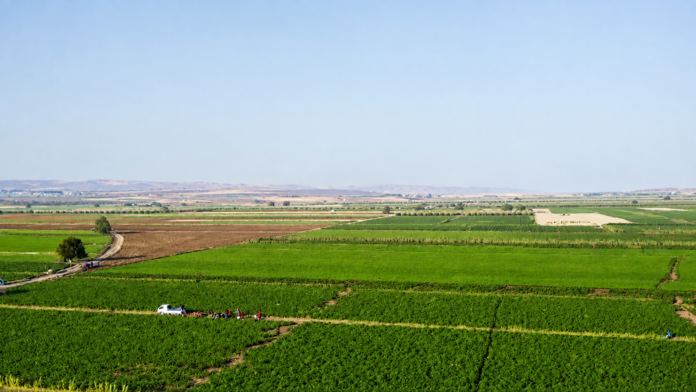
The wide agricultural plains of Pishdar turn green every summer as farmers grow large quantities of okra. The fields have become an important source of income for hundreds of families.
Farmers from different areas travel to Pishdar each year to cultivate the crop.
Hussein Mohammed, a farmer from Sardasht in eastern Kurdistan, moved to Pishdar with his family this year. He rented two dunams of farmland and planted them with okra.
Mohammed said okra farming requires intensive work and careful management. Farmers begin planting in the first month of the year. They then spend months caring for the crop before harvesting begins.
The okra harvest in the Raparin Administration usually starts in mid-June. Farmers continue harvesting until the end of September. Farmers in the area grow two main types of okra. These include varieties with narrow pods and varieties with wider pods.
Farooq Rasul, another local farmer, said producers send most of their okra to wholesale markets in Erbil and Sulaimani. Traders then sort the crop according to size. They distribute it to restaurants, markets, and other buyers across the Kurdistan Region.
Okra prices change throughout the farming season. Supply levels largely determine the market price. At the beginning of the season, one kilogram can sell for more than 5,000 Iraqi dinars. However, prices fall when production increases.
In August, when farmers bring larger quantities to markets, the price can drop to around 1,250 dinars per kilogram. According to figures from the Raparin Agriculture Directorate, farmers cultivate around 1,500 dunams of land for okra each year.
Annual production exceeds 5,000 tons, making okra one of the important agricultural products in the area. The fertile soil and suitable climate support strong agricultural production in Pishdar and Bitwatin.
These natural advantages have helped the two areas become major okra-producing zones in the Kurdistan Region.
The growing okra sector also supports local employment and provides income for farming families.
With continued production and better market access, Pishdar could further strengthen its position as an important agricultural center for okra in the Kurdistan Region.