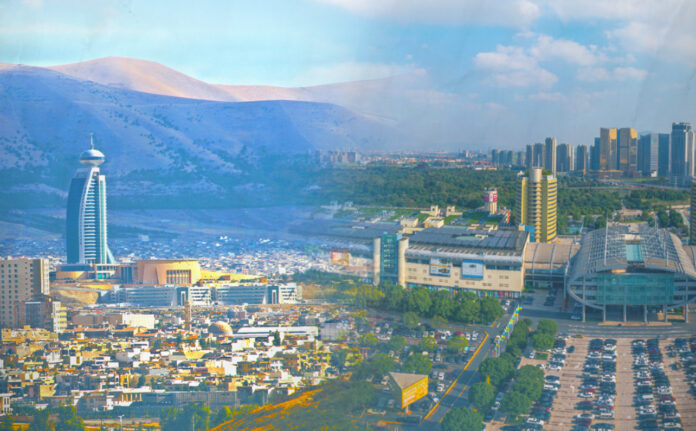
The Kurdistan Region is becoming a major hub for diaspora investment. It now offers Assyrians a historic chance to rebuild their communities through full foreign ownership.
The Kurdistan Region of Iraq (KRI), home to many historic Assyrian towns, provides one of the most open investment systems in the Middle East. Federal Iraqi law requires investors to partner with local owners who hold at least 51%. The KRI removes this barrier. It allows 100% foreign ownership, giving Assyrian entrepreneurs in the U.S. and Europe full control over their projects.
Additionally, a recent Assyrian-American delegation visited the region. Members met with senior officials, including Prime Minister Masrour Barzani and Mohammad Shukri, head of the KRG Board of Investment. Officials stressed that diaspora-led investment can support Assyrian, Chaldean, and Syriac communities. Delegates also looked at business ideas that protect cultural identity while creating economic growth.
Moreover, investment Law No. 4 of 2006 sits at the center of this opportunity. It guarantees equal treatment for local and foreign investors. Its benefits include:
- 100% foreign ownership, including for U.S. and European LLCs
- Tax exemptions for up to ten years
- Land-use rights for as long as 50 years, sometimes at discounted or zero cost
- Free repatriation of profits in convertible currency
- Simplified licensing for projects above $2.5 million, plus priority access to land and infrastructure
Furthermore, these rules work independently of Baghdad’s laws. Investors avoid the bureaucracy and limits found elsewhere in Iraq.
Therefore, in a new update, Board of Investment spokesperson Bargasht Akrayee announced that David Tafuri, President of the U.S.-Kurdistan Business Council, will visit the region with a team of American investors. They will meet top KRG leaders and local business owners to explore new opportunities. Tafuri, a lawyer and former U.S. State Department official in Baghdad, often leads such missions to expand economic ties.
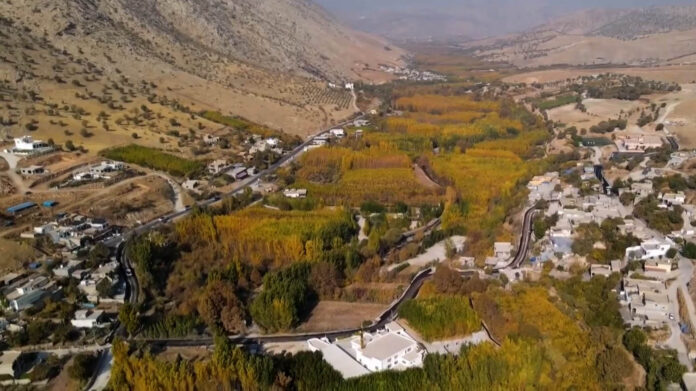
For decades, migration has weakened Assyrian towns in Nineveh, Duhok, Ankawa, and Alqosh. The KRG’s investment framework offers a path to reverse that decline. New projects in agriculture, education, healthcare, housing, tourism, and finance can create jobs and protect cultural heritage.
Experts advise investors to use a two-tier model: a U.S. holding company and a Kurdistan operating company. This structure provides extra legal protection under international investment rules.
Additionally, Alexander Karana, an intellectual property attorney who joined the recent delegation, called this moment historic. Writing in Global Strat View, he said the Kurdistan Region gives Assyrians the dignity, safety, and stability they need to invest at home.
Through strategic investment, the Assyrian diaspora can preserve its culture, empower communities, and help build a modern and prosperous Kurdistan.