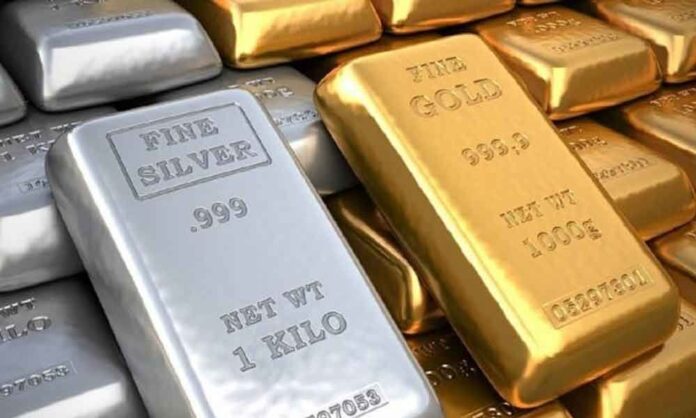
Gold prices jumped sharply on Wednesday after Asian markets reopened. The price rose by 2.56 percent, pushing gold to nearly $4,590 per ounce. Investors increased demand for safe-haven assets as economic and geopolitical uncertainty continued to shape global sentiment and drive cautious trading behavior.
At the same time, oil prices declined, which helped ease concerns about rising inflation. Lower energy costs often stabilize markets and reduce pressure on central banks to tighten monetary policy. As a result, investors now feel less urgency about aggressive interest rate hikes, which has supported broader confidence across financial markets.
Comments from Donald Trump also influenced market movements. He said Tehran is taking a serious approach in its dealings with Washington. His remarks weakened the U.S. dollar slightly, which provided additional support for gold prices in global trading.
On Wednesday, the U.S. Dollar Index fell by 0.17 percent. This index tracks the dollar against six major global currencies. When the dollar weakens, gold becomes cheaper for foreign investors. This dynamic typically boosts demand and contributes to rising gold prices across international markets.
Moreover, despite today’s strong gains, gold still trades below its earlier peak. Prices remain about 17 percent lower than the record levels reached in January. This gap shows that the market has not fully recovered, even though recent movements suggest renewed upward momentum.
Additionally, analysts say several factors continue to shape gold prices. Political developments, currency fluctuations, and commodity trends all influence daily price movements. Investors closely monitor these signals as they search for stability and try to manage risk in uncertain conditions.
Overall, gold’s recent rise per ounce highlights its role as a reliable safe-haven asset. During periods of instability, investors often turn to gold to protect their wealth and preserve long-term value, especially during prolonged global economic uncertainty and market volatility.